
ShopKind for a Cause: One Extension, Many Causes
ShopKind for a Cause is a free browser extension that turns everyday online shopping into support for local causes, no extra cost, no extra effort.
Read more
Operator Insights
Most businesses ask where to add AI first. The better question is whether the workflow underneath is stable enough to hand off. Here is the honest audit to run before touching any tool.

A client came to us recently with a question we hear a lot: "How do we start incorporating AI into our workflow?"
Good question. Wrong starting point.
After a short conversation, it became clear that their workflow was not ready for AI, not because AI could not eventually help them, but because the underlying process was too fragmented to build on. Different team members handled the same task differently. Handoffs were informal. Outputs were inconsistent. Plugging an AI layer on top of that would not have solved anything. It would have just made the chaos faster.
We told them: fix the workflow first. Then we will talk about AI.
That is not the answer most vendors give. But it is the honest one.
The pressure to add AI is real. Vendors are pushing it. Competitors are talking about it. The Shopify CEO made headlines for requiring employees to justify any new hire by explaining why AI could not do the job instead.
So business owners are asking: Where do I add AI?
That is the wrong question. The right question is: Which parts of my operation actually hold together well enough to hand off?
AI amplifies what is working. It does not fix what is not. A fragile, inconsistent process fed into an AI agent produces fragile, inconsistent results, just faster and with more confidence than before. That is worse, not better.
The Band-Aid-on-a-broken-leg problem is not just philosophical. It is practical. If your workflow changes next month, and in small businesses it often does, any AI integration built on top of a shaky foundation breaks with it. Now you have two things to fix instead of one.

Before evaluating a single product, answer three questions about the process you want to automate:
Use your judgment is not a step.If your process has all of that, you are not just ready for automation. You are ready for something more powerful: an agentic workflow.
Most people think of AI as a chatbot you talk to. Agentic AI is different. An agent can take actions, send emails, pull data, run tasks, hand off to other agents, and loop until a condition is met. It is closer to a junior operator you have trained than a search engine you query.
If you are exploring this space seriously, these are two good frameworks to understand. They solve different problems and appeal to different kinds of operators.

A strong fit when you want an agent living inside the messaging tools you already use.
OpenClaw is a personal AI assistant designed to actually do things, including clearing your inbox, managing your calendar, and sending emails from whatever messaging platform you already use. It is built around practical task execution and persistent memory, and it runs on your setup, not a walled garden. Pros - Practical messaging-native workflow - Strong fit for individuals and small teams - Easier to approach operationally Tradeoffs - Still depends on a stable underlying workflow - Benefits from thoughtful process design and guardrails

A better fit for technical teams that want more control over infrastructure, sandboxing, and unattended workflows.
Hermes Agent by Nous Research is open-source and MIT-licensed. It runs on your server, builds skills over time, schedules automations in plain language, and can spin up isolated subagents for parallel tasks. Pros - More infrastructure and sandboxing control - Better fit for serious unattended pipelines - Strong flexibility for technical teams Tradeoffs - More technical setup and operational maturity required - Also will not rescue a messy workflow underneath
Neither of these is plug-and-play. They are frameworks, not finished products. That distinction matters.
Pros
Watch outs
There is a gap between AI can do this and AI is doing this reliably in your business.
Configuring an agentic workflow involves real decisions: what tools the agent can access, what it is explicitly not allowed to do, how it handles edge cases, what the system prompt actually says, what happens when inputs are unexpected, and where the human-in-the-loop checkpoints sit. Done right, it is durable and genuinely useful. Done sloppily, it is a liability wearing a productivity hat.
This is not a reason to avoid it. It is a reason to go in with accurate expectations, or get help from someone who has built these before.
We have worked through exactly this kind of evaluation with clients, identifying what is actually AI-ready, flagging what needs process work first, and when the time is right, configuring and building agentic workflows that hold up when things change.
If you want a second opinion on whether your workflow is ready, or you want someone to build it with you rather than figure it out alone, reach out to IJT. No pitch, no jargon, just a straight conversation about what makes sense for your situation.
ShopKind for a Cause is a free browser extension that turns everyday online shopping into support for local causes, no extra cost, no extra effort.
Read more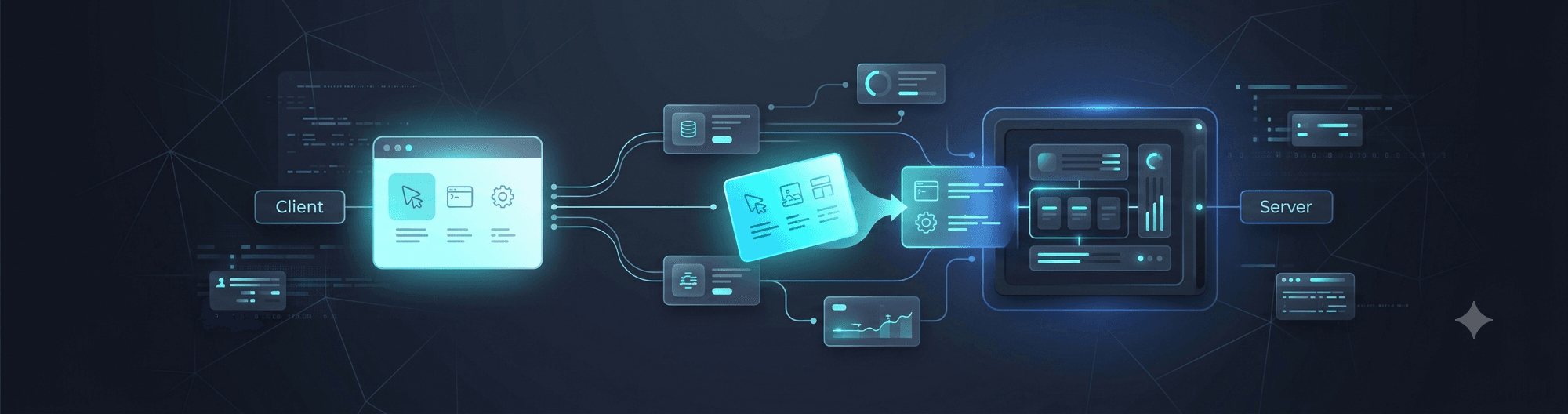
MCP vs API, explained without the jargon: how AI tools discover what they can do at runtime instead of relying on hardcoded developer logic, and why that matters for businesses adding AI to their workflows.
Read more